
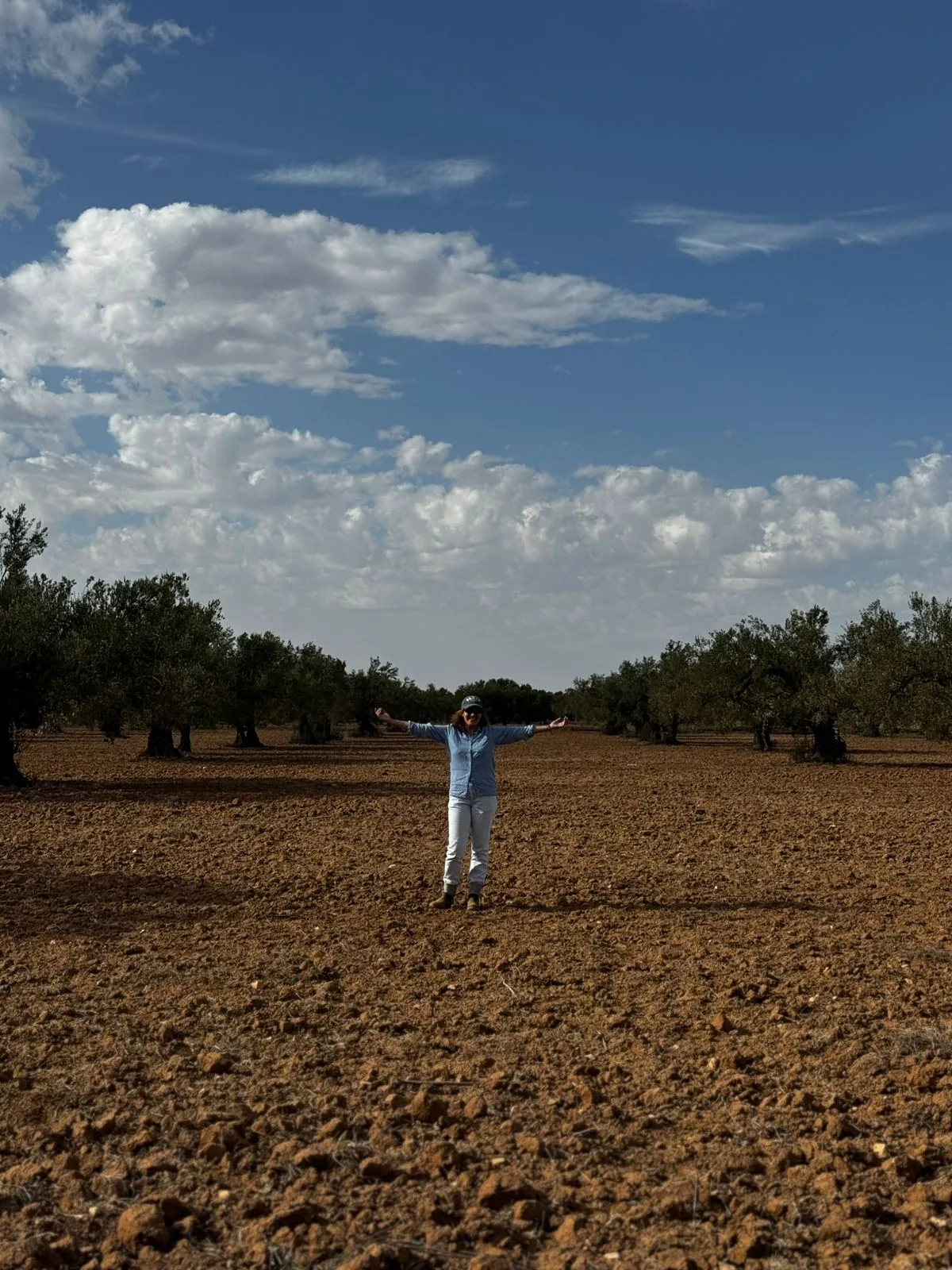

Gharess Chogran Hkeima · Mahdia · Tunisia
300
Three hundred trees. Not one more.
The pathThree hundred trees
Three hundred trees, one track to walk them all.
Planted by my great-grandfather. Eighteen metres apart, so that every one of them gets the light. At harvest I walk them one by one. Each tree has its number, each number its pair of hands.
See the grove →The soil35° north
Hkeima, the soil that holds the water.
Clay and silt, what the old men of the village call good ground for an olive tree. A few kilometres from the sea, in my family for two centuries.
- 18 metres between the trees
- No chemical treatment
- Four generations
The gestureFour generations
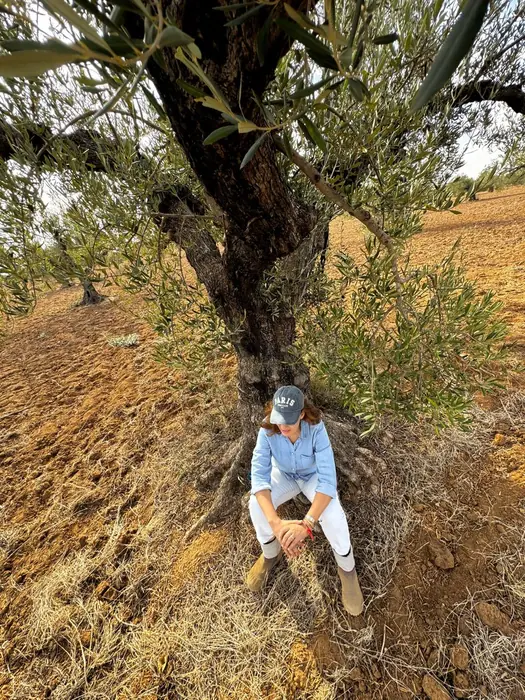
The same gesture,four times over.
A gesture that comes back every autumn, and that I repeat until it is right.
- My great-grandfather — the planting
- My grandfather
- My father
- Me, Malek — since 2021
The tree47
One of three hundred.
Picked by hand so the fruit is never bruised. Cold pressed the same day, so the olive has no time to oxidise. No heat, no additives. Slower work. It is the slowness that keeps the taste intact.
The first oil2026-2027 harvest
The light comes out gold.
Cut grass. Olive leaf. A quiet bitterness, and a peppery edge that arrives at the end and never takes over.
Tasting notes recorded using the International Olive Council method
See the sizes →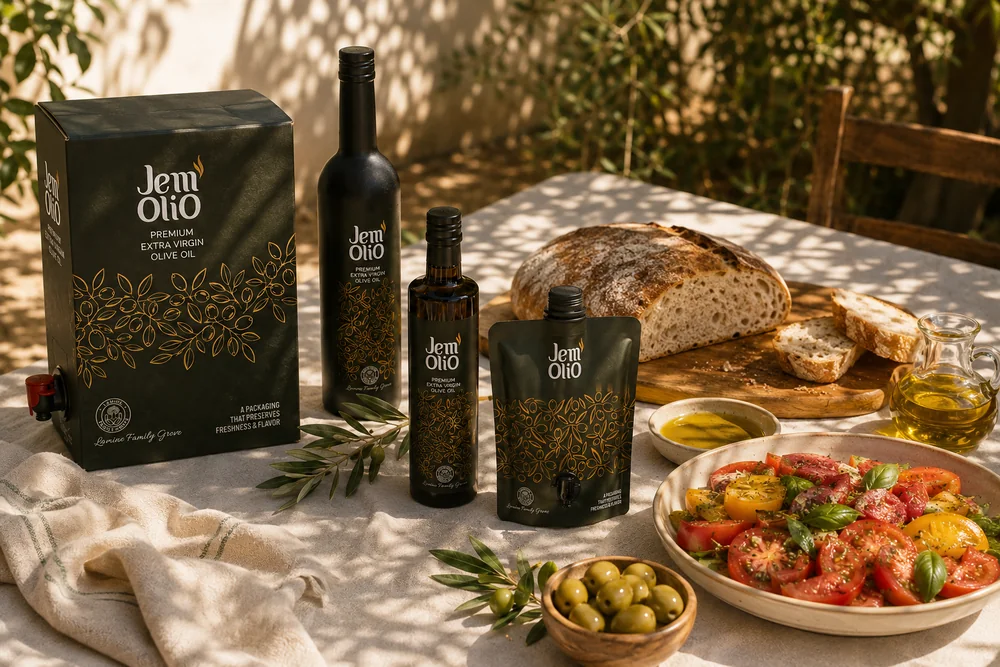
At the table
On your table.
One oil, three ways to keep it at home. The pouch and the Bag-in-Box shield it from light and air down to the last drop.
Nothing is left of the 2025-2026 harvest. What you reserve here is the one picked in November 2026.
The refill
Your 1 litre pouch has a second life.
Once empty, there is no need to buy another: I refill it and you pay for the oil and the shipping only. Less waste, and an oil that costs less with every order.
Monthly, every two months or quarterly, with no commitment of any length.
Gharess Chogran Hkeima
Three hundred trees. Not one more.
Malek Lamine
Four generations on the same land